Good working relationships can lead to new jobs, new business deals and new ideas. But getting in touch with the right people isn’t always easy. Maybe you have a great profile and useful skills but still find it hard to start conversations with people in the industry.
LinkedIn Professional Networking can help with that. LinkedIn is a place where you can meet people in your field, learn from their experience and build relationships that can help your career.
And the best part? You don’t need to have thousands of connections to make an impact. Having a few real relationships is more valuable than having a long list of people who never really interact with you.
In this guide, we will share easy tips to improve your networking skills, interact with experts and leverage your LinkedIn profile. Also we will see how tools like Tapect can help you share your professional details more easily.
What Is LinkedIn Professional Networking?
LinkedIn Professional Networking refers to the use of LinkedIn to develop relationships with people with similar career interests, skills, or business objectives. These can be professionals like industry experts, company founders, recruiters, managers, clients, etc.
Good networking is not about adding random people to your contact list, it’s about real conversations and shared interests.
If you are in digital marketing, you can contact SEO specialists, content writers, marketing managers and business owners. Their posts and experiences can help you find opportunities and learn new skills.
LinkedIn is a professional networking site that allows you to:
- Network with people in your industry.
- Take a page out of the pros’ book.
- Share your knowledge and work .
- Search for jobs and business opportunities.
- Build your professional credibility.
The idea is not to ask everyone for a job or favour. It is to build relationships that are beneficial to both sides.
1. Create a Strong LinkedIn Profile
Before you start tapping your network of experts, make sure your profile tells people who you are and what you do.
Before accepting your connection request, someone might look at your profile. A full profile helps them see what value a connection with you could bring them.
Improve These Important Profile Sections
- Profile photo: Use a clear, friendly, and professional picture.
- Headline: Explain your role and main skills instead of writing only your job title.
- About section: Share your experience, strengths, and career goals in simple words.
- Experience: Add your previous roles, responsibilities, and achievements.
- Skills: Include skills that match your industry and career plans.
- Featured section: Share useful projects, articles, case studies, or portfolio links.
For instance, instead of writing “SEO Executive” you could write “SEO Executive | On-Page SEO | Keyword Research | Technical SEO”.
A clear profile not only helps the right people understand your experience, it gives them a reason to connect.
2. Find the Right People to Connect With
Successful LinkedIn Professional Networking starts with choosing the right connection. You don’t have to send out requests to everyone you find.
Begin by considering what you want to accomplish. Looking for career advice, new clients, industry knowledge or job opportunities?
Once you’ve figured out your goal, look for people who can help you learn or grow.
Who Should You Connect With?
Connect with:
- Industry experts who share useful knowledge.
- Recruiters who hire people with your skills.
- Managers working in your target companies.
- Business owners who may need your services.
- Professionals with similar career interests.
- People who studied at your college or worked at your previous company.
Use LinkedIn’s search feature to find people by job title, company, location, or industry.
Before sending a request, read their profile. Share interests, recent posts, or professional accomplishments that can serve as a reason to connect.
3. Write Personal Connection Messages
It’s not always bad to send a connection request without a message, but a short personal note can make your request feel more authentic.
Don’t send the same message to everyone. We know you get a lot of requests, so a note that shows you’ve actually taken an interest in their work can help you stand out.
Example of a Connection Message
Hi Rahul, I stumbled onto your profile while researching SEO. I appreciate your insights on improving website rankings. I would love to connect and learn from your experience.”
Keep your message short and friendly.
You could mention a common interest, a post you liked, or an ability you’d like to learn. In your first message, do not request a job or a lengthy meeting.
The goal is simple: start a conversation, not drive to a result.
4. Engage With Posts Before Sending Requests
One of the easiest ways to meet new people is to get active in your industry.
LinkedIn Professional Networking isn’t just about requesting. It’s about being interested in what people are saying and jumping into conversations.
Simple Ways to Engage
- Like posts that you find useful.
- Leave thoughtful comments instead of writing only “Nice post.”
- Share your own experiences when they relate to a topic.
- Ask relevant questions that encourage discussion.
- Congratulate people on meaningful career achievements.
For example, if an SEO expert is sharing tips about keyword research, you might comment, “Search intent has been really helpful for me when planning out blog content. “Also, do you see competitor pages before choosing target keywords?”
It shows you’re interested and can open up a meaningful conversation.
You don’t have to post every day. Begin with a few helpful swaps a week and build up a routine that works for you.
5. Share Useful Content on Your Profile
This way people can see your skills without needing to ask you directly.
You don’t have to be a renowned expert to post on LinkedIn. Share what you’re learning, describe a problem you solved, or give a practical tip from your work.
Content Ideas for Professionals
- Lessons learned from a recent project.
- Common mistakes people make in your industry.
- Simple tips for beginners.
- A short case study showing your work.
- Your thoughts on a new industry trend.
- Tools that have helped you work better.
Make your posts easy to read. I’m going to use short paragraphs and bullet points where it makes the information clearer.
LinkedIn Professional Networking is most useful when people know you for sharing good ideas and having useful conversations.
Instead focus on being helpful instead of trying to make every post popular.
6. Build Relationships Instead of Collecting Connections
5,000 connections doesn’t necessarily mean you have a strong professional network.
You develop a real professional relationship when people talk to each other, share ideas and help each other when they can.
Say thank you to the person who accepted your request and find a natural way to keep the conversation going.
You could ask about something they’ve talked about recently or share a useful resource related to their work.
If someone does not reply do not repeat messages. People are busy, and not every connection is going to become an active conversation.
The professional networker knows trust doesn’t happen fast. Be polite, respect peoples time and focus on relationships that grow naturally.
7. Use a Digital Business Card to Share Your Details
Networking can happen anywhere from conferences to interviews, business meetings and industry events. If so, swapping contact details right away can make it easier to follow up.
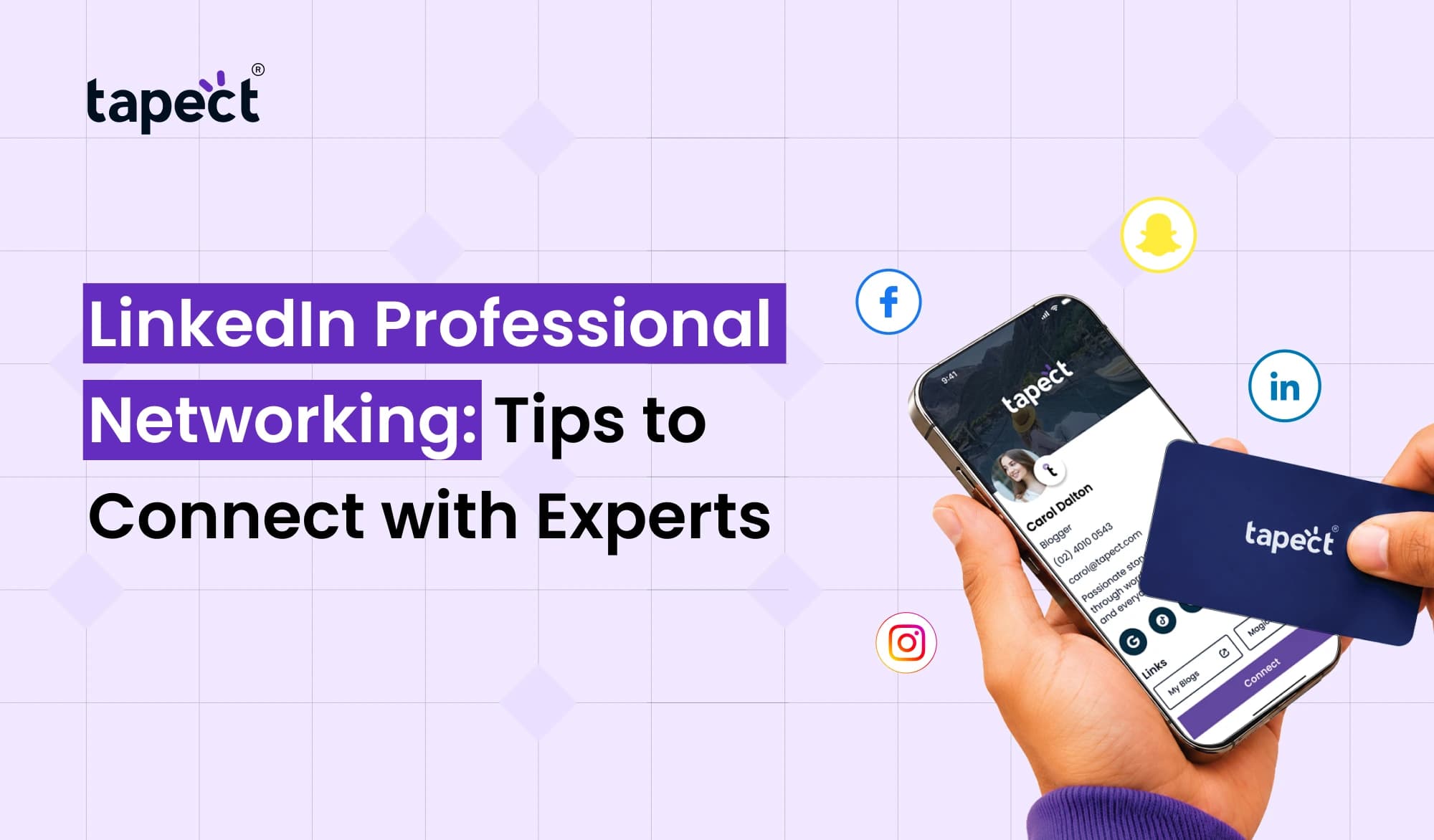
A digital business card is a convenient way to get your professional information online so that people can contact you. You may provide information such as your name, job title, phone number, email address, website and LinkedIn profile.
Tapect provides digital networking solutions that make it easy for professionals to share their contact information.
How Tapect Can Support Your Networking
- Easy contact sharing: Give people a simple way to access your professional details.
- LinkedIn access: Include your LinkedIn profile so new contacts can find you online.
- Less manual typing: Make it easier for people to reach you after a meeting.
- Flexible sharing: Use a digital profile or a compatible NFC business card for in-person networking.
An NFC business card lets you share a linked profile just by tapping it to a compatible smartphone, or you can provide an alternative way to open your details with a QR code.
These tools can aid LinkedIn Professional Networking by making it easier to move from face-to-face introduction to online connection.
8. Follow Up Without Being Pushy
The first conversation is just the start. A polite follow up can help you develop a stronger relationship over time.
If you meet someone at an event, send a quick note within a reasonable amount of time. Tell me where we met and say something we talked about.
For instance:
Hi Priya, It was lovely to meet you yesterday at the marketing event. I really enjoyed our discussion about content strategy. Looking forward to connecting here on LinkedIn.”
If someone gives you advice, say thank you. If they send you an interesting article, tell them what you learned from it.
Don’t ask for favours in every conversation. Allow relationships to develop and seek opportunities to assist where possible.
9. Common LinkedIn Networking Mistakes to Avoid
Having a complete profile is not enough. A few habits can make your networking less effective.
And avoid these common mistakes:
- Sending the same generic message to hundreds of people.
- Asking for a job immediately after connecting.
- Writing long messages before building any trust.
- Commenting only to promote your services.
- Ignoring messages from people you have contacted.
- Sharing unverified information or misleading achievements.
- Focusing on connection numbers instead of useful relationships.
LinkedIn Professional Networking is at its best when you treat people as people, not opportunities to collect.
Be authentic about your experiences, treat conversations with respect, and provide people with a compelling reason to remain in touch.
FAQs
1. How should beginners begin with LinkedIn Professional Networking?
First, finish your profile, find people in your industry, and send personalised connection requests. Engage with helpful posts and build relationships with regular, respectful conversations.
2. How many connections should I have on LinkedIn?
There is no ideal number. Concentrate on meeting people with similar interests, in the same field as you or who can help you to learn. A smaller network of active contacts is more useful than thousands of inactive contacts.
3. How do I network with industry professionals on Linkedin?
Read their profiles, follow their posts, comment in a meaningful way and send a short note on why you want to connect. Be respectful and don’t ask for too much too soon.
4. Will LinkedIn help me find a job?
Yes. You can find job openings, connect with recruiters, learn about companies and build relationships with people working in your target roles. Keep your profile up to date and communicate professionally.
5. Will having a digital business card help me on LinkedIn?
Yes. Digital business card helps you to share your contact information and LinkedIn profile when you are on a meeting or event. Solutions like Tapect help to bring your professional details to one handy place.
Conclusion
Building a network takes time. It takes time, honest conversations and a willingness to learn from other people. Have a clear profile, connect with the right professionals, share useful ideas and follow up in a friendly way.
LinkedIn Professional Networking is a means to discover new opportunities, gain new knowledge and develop relationships that will help you reach your long-term career goals.
Remember, you don’t need to know everybody in your industry. You just have to make the right relationships and take care of them.
Want to make networking easier? Check out Tapect’s digital business card solutions and give people an easy way to get your contact information and LinkedIn profile. With Tapect, build better professional connections today.
 13 Oct 2026
 business